I’ve been a writer for a very long time. Before I ever started to allow myself to write fiction, I completed a master’s thesis, a PhD thesis, and an educational reference book. No matter how many writing projects I complete, the beginning and middle stages always feel daunting. For many years, and through at least two major writing projects and numerous office set-ups, I have kept a sticky note taped someplace where I can see it every time I sit down at my computer.
It remains there today, taped to the books I use to prop up my laptop: The Riverside Anthology of Literature, which I used during my first year of university, and The Chicago Manual of Style. The sticky note has been rewritten a few times but retains the exact same words as the first version. The string of words on that note remind me to start with a draft not the final version in mind, and that focused effort is the only way through a writing project.
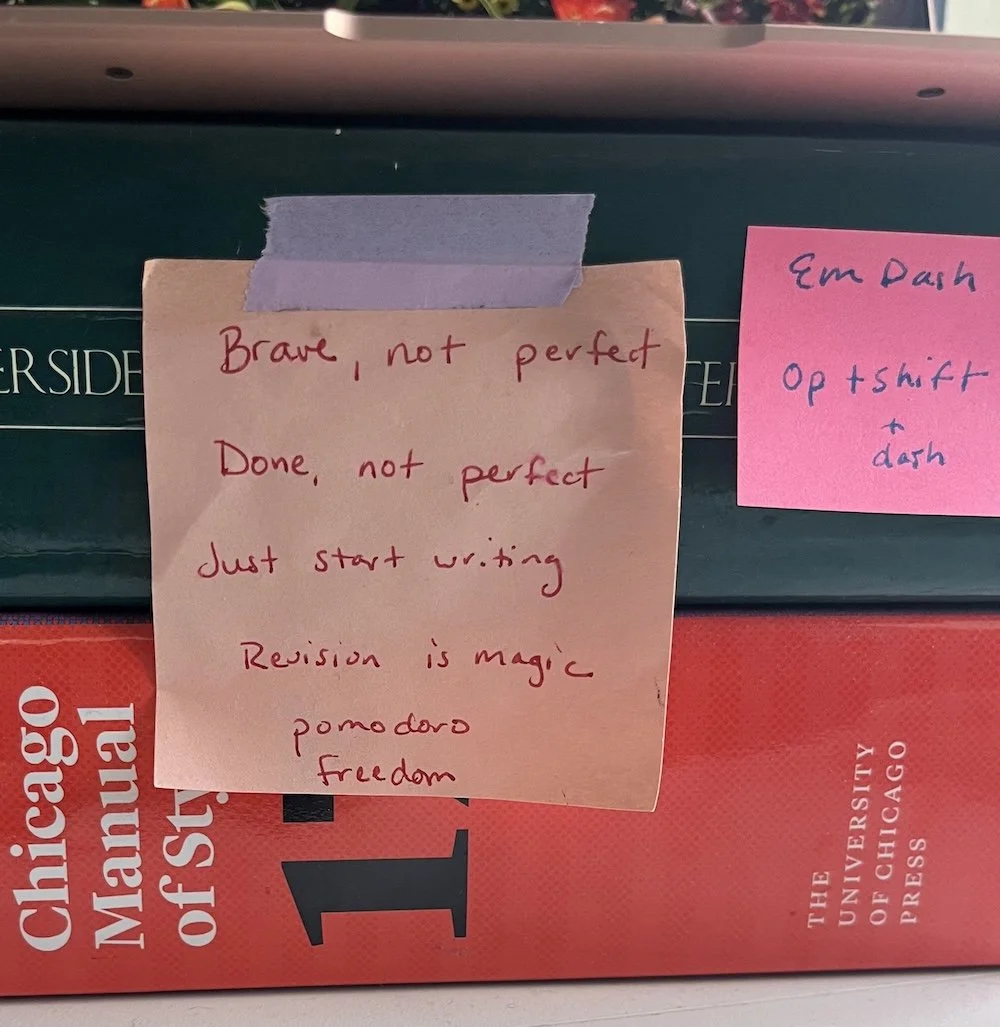
The sticky note that keeps me motivated through long writing projects.
Brave, not perfect. Because embarking on a large writing project of any sort takes a kind of blind leap of faith that requires at least a little bit of bravery.
Done, not perfect. The phrase “not perfect” is on the sticky note twice for a reason. No writing project is ever going to feel completely perfect. Done does not mean there is nothing more that can be improved, instead it means that it has gotten to a point where is it ready to be shared with a wider audience. It is also a reminder that the first draft is not the final draft. Just get the first draft done so you have something to work with.
Just start writing. The biggest hurdle is often finding the right first words to put on that blank page. So just start writing something, anything. It can be changed or removed later so no need to hold back or wait for the perfect words. I have used all sorts of cheats to get my brain out of its own way. I make a list of words in a theme, or write what I see out the window. I tell myself the story without writing it out as a scene. Sometimes, if the blank page is feeling really overwhelming, I find a paragraph I have written for something else and past it onto the page. There, now your brain thinks it has accomplished something and thinks it can do more. It’s amazing how well that trick works.
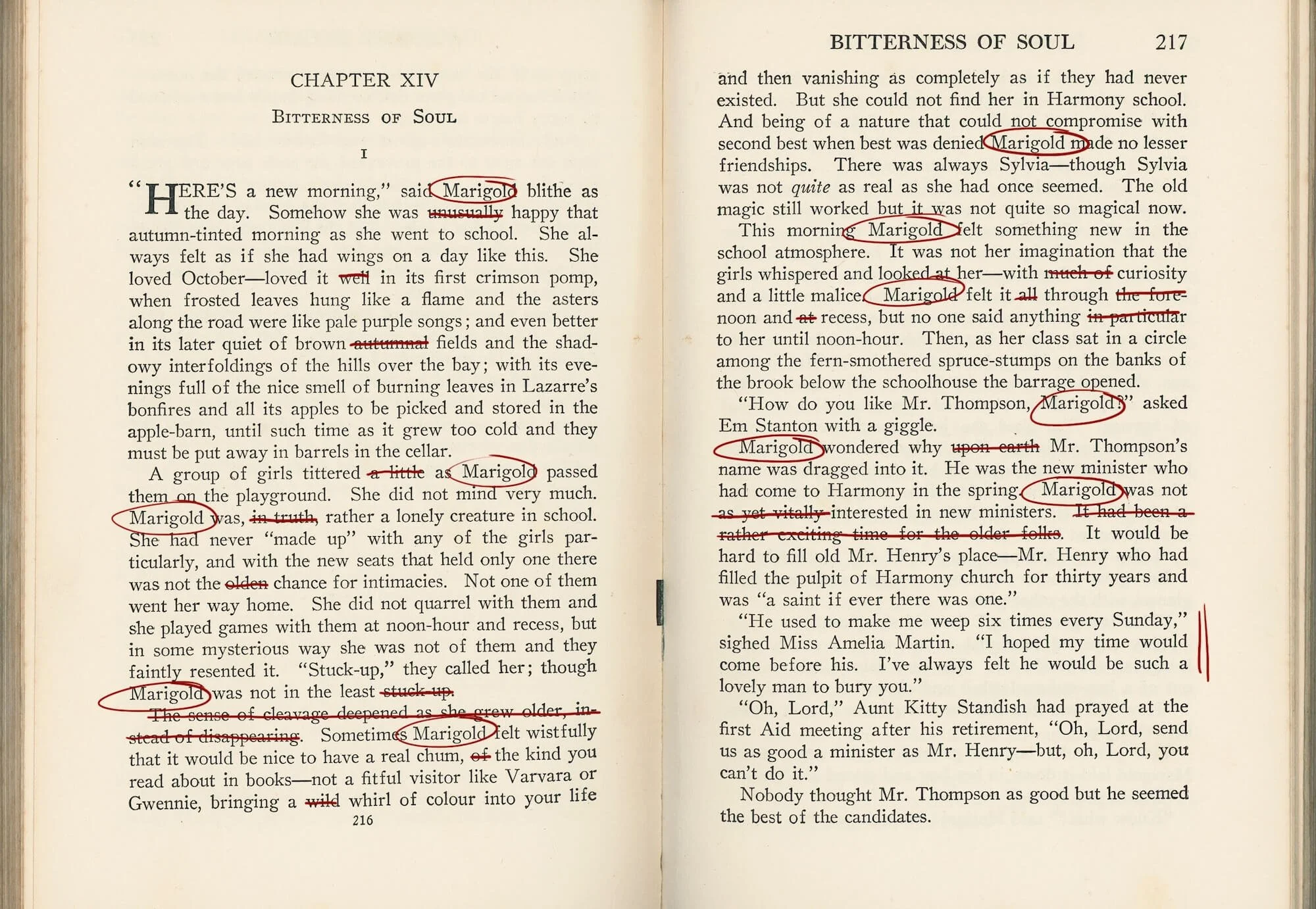
Revision is magic. Many people dread the revision process. They’ve spent ages working on a book and finally get to the end only to discover there is much more work to be done. I love revision because it means that the first draft gets to be just that—a draft.
Pomodoro. For those who are not familiar with the Pomodoro technique, it is a method of working for a set period of time, usually 25 minutes with a regular short break, usually 5 minutes. Sometimes, giving myself a container of time in which to write is the best way to avoid procrastination and get over that initial resistance to starting. I set the timer, sometimes for just 10 minutes to start with and then take a break. I repeat that until I have written for the length of time I had planned, often ignoring the breaks once I get going (but don’t tell my eye doctor that!).
Freedom. This is the name of the app that I once used to help block out distractions on the internet and keep me focused on my writing. I don’t use the app anymore (getting off social media helped immensely) but I keep the word as reminder that focused work is more enjoyable, efficient, and results in better quality writing.
Now you know some of my tricks for making progress on big writing projects. Give them a try and if you still find yourself struggling, reach out for support with a coaching session or two.
*Yes, there are em dashes in my writing, but I promise that I wrote this on my own. I do not use AI for anything related to writing and editing.